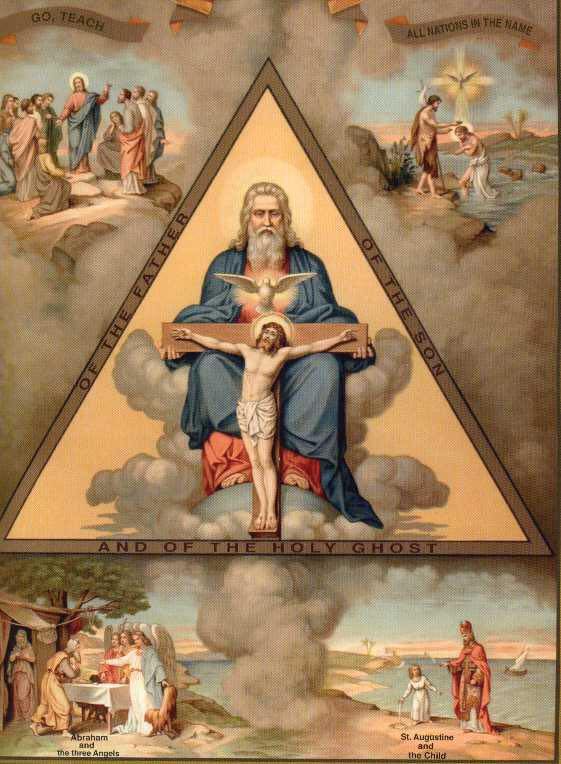
Timing – Sermon on Matthew 17:1-9 for the Transfiguration of Our Lord

Matthew 17:1-9

In the name of Jesus. Amen.

The Transfiguration is unique. It is the only time that the curtain gets pulled back and Jesus’ glory, His divine splendor, is allowed to shine through His human nature. Sure, the night Jesus was born, the glory of the Lord shined, but it was in a field outside of Bethlehem to a bunch of shepherds (Lk. 2:8-9). But when the shepherds found newly-born Jesus, the glory of the Lord wasn’t radiating from baby Jesus. Instead, He was surrounded by animals, wrapped in swaddling cloths, and lying in a feeding trough. In last week’s Gospel lesson, Jesus turned water into wine at the wedding at Cana, and John says that miracle is how Jesus manifested His glory (Jn. 2:1-11). But it was with and through the sign. Jesus didn’t start shining like He does here in the Transfiguration. Probably, the bride would’ve been upset by that. Brides don’t want to be one-upped in appearance at their wedding.

The amazing thing about the Transfiguration isn’t that Jesus gets all shiny and glorious. Instead, the amazing thing is that Jesus wasn’t always like that during His time on earth. Jesus is the only-begotten Son of God, God of God, Light of Light, very God of very God, and He was able to conceal His glory when He came to earth. That’s miraculous, and unfortunately, we (myself included) are a little numb to that. The infinite, eternal, glorious God wrapped Himself in human flesh so thoroughly that He looked like a normal 1st century Jewish son of a carpenter (Mt. 13:55).

Jesus only let His glory shine forth once, and it’s here before the small audience of Peter, James, and John. If I were God (and thank God I’m not), I probably would have timed the Transfiguration differently.

Maybe, I would have done it when the 5,000 men plus women and children are surrounding Jesus in the wilderness (Mt. 14:13-21). That’s when Jesus was at the height of popularity and had the most people following Him. There, the day is coming to an end, and the crowds have been listening to Him teach all day. They are hungry and far from home. To me, that seems like a good time for Jesus to get shiny. Pull back the curtain and let everyone in that massive throng see Jesus’ divinity before He feeds them. But Jesus didn’t time His Transfiguration then.

Maybe, I would have had it happen during the trial before all the religious leaders (Mt. 26:58-68). Seventy of the most important priests and leaders, who were all legal experts and oversaw civil matters. It’s like a presidential cabinet meeting; they’re all gathered together. It’s like a presidential cabinet meeting. And the high priest says, “I adjure you by the living God, tell us if you are the Christ, the Son of God.” To me, that seems like good timing for the Transfiguration. That seems like a good time to shine brighter than the sun. But Jesus didn’t time His Transfiguration then.

Maybe, I would have done it when Pilate was asking whom he should release instead of crucify (Mt. 27:15-23). Pilate walks out on the balcony of the palace with Jesus and Barabbas there standing before the crowd, and Pilate asks, “Which of the two do you want me to release for You?” And the crowds keep crying for Barabbas to be released and for Jesus to be crucified. To me that seems like a good time to show the hidden glory and have clothes as white as light. But Jesus didn’t time His Transfiguration then.

Maybe I would have timed the Transfiguration to happen right before the beating and whipping. Or, maybe, while Jesus was laid on the cross and right as the soldier held the nail in one hand and raised the hammer in his other hand. Imagine that for the timing of the Transfiguration. The soldiers would’ve dropped the hammer and nails and run for the hills. But Jesus didn’t time His Transfiguration then. In all of those instances, Jesus keeps His majesty concealed.

Well, I’m not God. You and I can be thankful for that because, if any of those instances were when Jesus was Transfigured, people would have ran away from Him. In God’s infinite wisdom, Jesus’ Transfiguration happens here in Mt. 17. He does it when only three of the twelve disciples are with Him. Jesus chooses this as the timing of His Transfiguration so we sinners can approach Him unafraid.

Let’s get a little more context for the timing. Later today, go back and read the last half of Mt. 16. There, Jesus asks the disciples, “Who do people say that the Son of Man is?” The disciples answer, “Some say John the Baptizer, others say Elijah, and others Jeremiah or one of the prophets.” Then Jesus turns the question, “But who do you say that I am?” Peter makes his great confession, “You are the Christ, the Son of the living God.” And Jesus goes on to promise that upon Peter’s confession He will build His Church, which the gates of hell will never overcome (Mt. 16:13-20).

Right after that, Jesus starts telling the disciples that He must go to Jerusalem to suffer, die, and rise again. Then, Peter takes Jesus aside and rebukes Him saying, “That will never happen to You.” But Jesus rebukes Peter, “Get behind me, Satan! You are a hindrance to Me. For you are not setting your mind on the things of God, but on the things of man”(Mt. 16:21-23). That’s the context for the Transfiguration.

Peter’s just been praised for confessing Christ as the Son of God. Then, Peter is harshly rebuked for saying that Jesus isn’tgoing to die and rise again. So, the disciples are wrestling with these two things that seem to contradict each other. On the one hand, they have heard that Jesus is the Messiah, and on the other hand, they’ve heard that He’s going to die. So, the disciples are probably starting to wonder if all the Old Testament prophecies about the Messiah wasn’t going to be nearly as great as they thought. They’re wondering if all that talk about glory and triumph and thrones and scepters is totally wrong. Well, if that’s what they were thinking, they were wrong.

To be the Christ means to suffer. To be the Christ means that God comes to bear the sins of the world (Jn. 1:29). To be the Christ means that God comes down to be rejected (Jn. 1:9-13). To be the Christ means that God comes down to go to the cross, shed His Own blood, die, and rise again. That is how the Christ enters into His glory (Lk. 24:26) and through that suffering Jesus grants to sinners, who believe in Him, the same glory that He had in the Transfiguration (Jn. 17:22Ro. 8:1729-30Php. 3:211 Jn. 3:2).

All of this is to say that the timing of the Transfiguration is exactly when it needed to be, and it occurred before the exact audience who needed to see it. Peter, James, and John needed to see it then so they would know that while Jesus suffered all those horrific things in His Passion, God was working to redeem them (Act. 2:363:14-151 Co. 2:8).

This is also why the church has decided to place the Transfiguration on this Sunday to prepare us for Lent and Holy Week. Starting next week, the names of the Sundays orient our hearts and minds toward Easter. Today as we turn our focus toward the Resurrection, we are grounded in the fact that Jesus is God of God, Light of Light, very God of very God who suffers the wrath of God that should have been reserved for us. But Jesus has humbled Himself to be our Friend and Savior.

Dear saints, Jesus hid His glory for most of His ministry, but it was always there. Yes, it was hidden, but it was certainly there. Just because something is hidden doesn’t mean that it doesn’t exist. Remember that. Remember that especially when you face difficult times, when you are suffering, when you feel distant from God. Jesus still has that full glory that is revealed in the Transfiguration – which is the same glory that He had throughout His time here on earth. The day is coming when He will once again put it on full display at the proper time. And that day is the same day when you will share in His glory.

Your glorious Savior is coming again soon. Until then, listen to Him and hold fast to His Word. In 1 Tim. 6:14-16, God encourages you to cling to His Word until the appearing of our Lord Jesus Christ who will be revealed at the proper time. The text goes on to say that Christ is the blessed and only Sovereign, the King of kings and Lord of lords, who alone has immortality and dwells in unapproachable light. 

And dear saints, you share that glory. As you wait for Christ’s return, humble yourselves under the mighty hand of God so that at the proper time He may exalt you (1 Pet. 5:6). Know that God’s timing is always good. When it fits God’s purpose, when it will benefit others, and when it will benefit you most, God will pull back the curtain again. Jesus promises that the day is coming when you who are righteous by grace through faith will shine like the sun in the kingdom of your Father (Mt. 13:43). May that day come soon. Amen.

The peace of God, which surpasses all understanding, will guard your hearts and minds in Christ Jesus (Php. 4:7). Amen.

Unblemished – Sermon on Ephesians 5:22-33 for the Second Sunday after Epiphany

Ephesians 5:22-33

In the name of Jesus. Amen.

This is a sermon on marriage. When I’ve preached on marriage in the past, I’ve offered a disclaimer, and I’m going to do that again today. This sermon isn’t intended to address all the different aspects of marriage. We’d be here for days and weeks. And this is a mixed audience. Many of you are currently married. Some have been through divorce. Some of you aren’t married, at least not yet. Some of you might never get married; know that Scripture says that remaining single is a good gift from God (see 1 Co. 7). And some of you have been married but are now widowed. You’ll hear in a minute that the reason being widowed is so hard is that you have, very literally, lost a part of yourself. To you, be comforted by Christ and the fact that your spouse will rise again (Jn. 11:23).

My intention with this sermon is show how marriage is God’s idea. Then, I’ll make four assertions about marriage to show how it is a good gift from God. Also, with those four assertions, I’d like to offer some Biblical advice for your marriage. If you have any questions about things I don’t address, feel free to ask me. So, with that said, are you ready?

When God created man (singular) in His image, He created them (plural) male and female (Gen. 1:27). Part of man (and here, please think ‘mankind’ or ‘humanity’) is to have a duality – two parts, or even better two persons. Scripture teaches that there is one God (Dt. 6:4), but three Persons – Father, Son, and Holy Spirit (Mt. 3:16-17Mt. 28:19). The creation of man (again think ‘mankind) in the image of God is that man has a plurality which we see in Adam, the male, and the woman,[1] the female.

In Gen. 2:18-25, Scripture gives us the play-by-play of the creation of mankind as man and woman. But before the play-by-play we learn how in Gen. 1, God gave Himself a grade each day of creation. Day 1, God sees the light He created and sees that it is good – A+ (Gen. 1:4). Then, Days 2, 3, 4, and 5, God sees what He makes and it’s all good. A+’s all around (Gen. 1:1012182125). Finally, on Day 6 God creates mankind to be the crown of His creation and sees that it was very good (Gen. 1:31) – A+++! But, again, Gen. 2:18-25 gives a little more insight into Day 6. God created Adam and decided it wasn’t good for Adam to be alone (Gen. 2:18). God wasn’t saying that because He made a mistake. He was saying that to show Adam the goodness of what He was about to do.

God put Adam to sleep, removes Adam’s rib (in Hebrew it’s literally Adam’s ‘side’), and from that chunk of Adam, God created Adam’s bride (Gen. 2:21-22). And Adam was really happy when he saw his bride. He said, “This at last is bone of my bones and flesh of my flesh; she shall be called Woman because she was taken out of Man” (Gen. 2:23). Then, we have the statement that gets quoted in this text from Eph., “Therefore a man shall leave his father and his mother and hold fast to his wife, and they shall become one flesh” (Gen. 2:24Eph. 5:31).

So, from its beginning and institution, God made marriage to be one man, who has given of himself, to have a bride who is literally from his own flesh. Dear saints, this is what marriage is, and it doesn’t matter how the world might try to redefine it. This one man and one woman union, this way that husband and wife complement and complete each other is God’s design, God’s invention, and God’s very good gift to all mankind.

In a real way, we can say that everyone who has ever lived and will ever live is here because of marriage. Even if the conception and birth of a child happened without a marriage (and instead a distortion of it), that individual is procreated by a man and a woman engaging in an act that God gave as a gift for marriage. I’m keeping this sermon PG, but, again, if you have any questions about what I said there, feel free to talk with me.

Keeping in mind what marriage is, we can talk about these four assertions that Scripture makes about marriage.

First, every marriage is God’s work, God’s joining. Jesus plainly says this about marriage. He talks about a man leaving his parents and being joined to his wife and becoming one flesh. Then our Lord says, “What God has joined together, let not man separate” (Mt. 19:6Mk. 10:9). To you who are married, remember this. Even when things get tough, even when you get into fights and arguments, even when you struggle, remind yourself, “God joined me to that person. My husband/my wife is God’s good gift to me.”

Second assertion, marriage is good. We already know this because God created the institution of marriage before He saw that everything He had made was very good – again that A+++ grade. But can we also see that marriage is good because of how the devil attacks it. I could spend weeks on how he attacks it, but I won’t. The devil hates marriage because he envies humans because we have the ability to procreate and he doesn’t (Mt. 22:30). Satan hates all marriages because they remind him of Christ and the Church. He also hates them because they are how children are procreated, which reminds him of God becoming flesh to crush his head (Gen. 3:15). So, the devil attacks marriage from all directions. Because marriage is good, Scripture’s advice to you who are married is this: defend your marriage against all attacks. Be in God’s Word together as a family. Be quick to forgive each other when you do wrong. Because of the Fall, marriages are built on the foundation of forgiveness. If your spouse does something wrong and apologizes, don’t just say, “Oh, that’s ok.” Instead, say, “I forgive you.” The words ‘sorry’ and ‘I forgive’ need to be normal, regular vocabulary in marriages.

That leads me to the third assertion. Marriage is hard work, but even that is good. It’s an delusion to think that the best marriages happen when a couple is ‘completely compatible’ with each other. It’s a delusion because we are sinners, and no two sinners are completely compatible. Sinners look out for their own interests and not the interests of others. So, in your marriages, sacrifice for each other and for your children. Don’t insist on your own way. Just as God took a chunk of Adam to create marriage, marriages are still a continual, sacrificial giving of self for the benefit of the spouse (Eph. 5:25).

Finally, fourth. Marriage is a mystery (Eph 5:32). We think we know what marriage is, but we can only scratch the surface of the mystery of marriage. Remember, God is the One who joins (Mt. 19:6Mk. 10:9) a husband and wife together in marriage. It isn’t them making a choice to get married. God joins them, and God continues to join you to your spouse each and every day.

But the greatest mystery of marriage is that marriage is one of the ways that God manifests Himself. In marriage, God manifests Himself as the Groom of you, believer. You, the Church, are His bride. He gives Himself up for you. He sanctifies you, making you holy. He cleanses you by Baptism, by washing of water with His Word.

Dear Charlotte, today in your Baptism, God washed and cleansed you so that you would be His. Because of your Baptism, you are completely and totally unblemished. All you believers here today, God did that for you as well in your Baptism.

Dear saints, you are the unblemished Bride of Christ. The reason you are unblemished is that He has made you unblemished, and God doesn’t make mistakes. He doesn’t cut any corners. So, rejoice that you are His Bride. And strive to make His love for you the foundation upon which you build your marriage. The marriage feast of the Lamb is coming soon. Come, Lord Jesus. Amen.

The peace of God, which surpasses all understanding, will guard your hearts and minds in Christ Jesus (Php. 4:7). Amen.
[1] She isn’t given the name “Eve” until after the Fall in Gen. 3:20.

Chosen – Sermon on 1 Corinthians 1:26-31 for the Baptism of Our Lord

1 Corinthians 1:26-31

In the name of Jesus. Amen.

How did you become a Christian? I bet, if we gave everyone a chance to share their story, that we we’d be sitting here for a really long time – and not just because of the number of you here. The one thing this text makes clear is that you didn’tbecome a Christian because of your own doing. You are a Christian because you were both called and chosen by God. It’s because of God that you are in Christ Jesus (1 Co. 1:30). Salvation belongs to God (Jon. 2:9Ps. 3:8Rev. 7:1019:1). It is His work, His doing.

Today, let me slightly reword the question “How did you become a Christian” to this: How did you get onto God’s team? I’m rewording it that way because this text reminds me of a schoolyard pick where two captains chose their teams. I’m guessing that most of you, at some point in your lives, have been involved in a schoolyard pick. You awkwardly stand around waiting to be called and chosen by a captain so you can go join the team and give everyone high fives and celebrate your victory before the game even begins. Being the last one chosen in a schoolyard pick stinks.

At the beginning of my 8th grade year, a friend invited me to a back to school event at his church. The other kids who were there were, basically, all people who were in my class or the classes above and below me. We were going to divide into teams to play kickball. Kristen was one of the team captains, and I don’t remember who the other captain was. Kristen and the other captain alternated picking individuals. The first kids picked were strong, fast, and good athletes. They were the kind of people I would have picked first to assemble a good kickball team, but I just stood there in the pool of kids waiting for my name to be called.

As the pool of kids shrunk, some people were chosen before me who were slow and completely unathletic. And I knew that Kristen didn’t like me very much, so I comforted myself, “She’s just picking them because she hates me.” (I wasn’t very popular in Junior High.) Anyway, it ended up that I was the final kid left. I wasn’t chosen at all. So, I was automatically on Kristen’s team, and she was greatly annoyed by that. But it was her response that hurt the most. She realized that I would be on her team and said, “Great, we’re stuck with ‘String-Bean.’” It was a severe blow to my adolescent pride to be so unwanted.

Dear saints, in the eyes of the world, not many of you are wise or powerful or influential or noble. In the eyes of the world, there isn’t much that is appealing about us citizens of the kingdom of heaven. On top of that, if God were to measure us according to the standards of His Law, He wouldn’t pick any human to be on His team, except Jesus. But that is exactly why Christ has come.

Because of our sin, we are all in opposition to God. But Jesus came to be the Lamb of God who takes away the sin of the world (Jn. 1:29). He takes undesirable sinners who recognize their sinfulness and repent. He makes them His children and heirs. God chose the foolish, the weak, the low and despised – even things that are not (1 Co. 1:28). God calls, chooses, and puts them on His team. And He chooses them for a purpose. And that purpose is to remove any reason or cause of boasting.

Now, I need to pause for a second because whenever we talk about why some people are saved and some are not, we need to recognize that those must remain two, separate questions. On the one hand, people are saved because of God’s doing, God’s choosing (Tit. 3:5). Again, salvation belongs to God, and He freely gives that salvation by grace through faith, which is not of our doing (Eph. 2:8-9). On the other hand, people who are not saved, they are condemned because of their own hardness of heart. Because of their refusal to repent. Because of their rejection of what Jesus has done. Because of their unbelief.

So, with that analogy about a schoolyard pick, don’t imagine for one second that the other captain is the devil and that he picked some before God picked them. That’s not the case – not at all. Jesus died for the sins of the world (Jn. 1:291 Jn. 2:2) and is the Savior of the world (1 Jn. 4:14).

The picture is this: When God chooses His team, the world laughs at every one of God’s selections because it looks like it’s going to be a losing team. But this is how God has always done His choosing.

In Dt. 7:7-8, God reminds His people through Moses that they are going to take over the Promised Land by saying, “It was not because you were more in number than any other people that the Lord set His love on you and chose you, for you were the fewest of all peoples, but it is because the Lord loves you,” that He chose you.

When God chose Gideon to defeat the Midianites, He chose Gideon because he was part of the weakest clan and the lowest son in his father’s house (Jdg. 6:11-16). And then, remember how God whittled down Gideon’s army before they fought against the enemy. Gideon started with 32,000 men, but God had him reduce it to the 300 soldiers who lapped water like dogs (Jdg. 7:1-25). God did that so His people wouldn’t dare to even imagine that their own strength had delivered them. All the glory for their victory would go to God alone.

Remember the people Jesus chose to be disciples and apostles. Most of them were fishermen and tax collectors, people who were viewed as normal, working-class laborers and people who were despised in their culture. Later, Jesus called Paul to be an apostle after he had persecuted the Church of Christ (1 Co. 15:9). The world sees these picks and laughs at God’s calling and choosing because it looks like a losing team.

Even Jesus Himself looked like a foolish pick to the world. He was a Man of griefs and acquainted with sorrows. He was despised and not esteemed (Is. 53:2). Even Nathanael, one of Jesus’ disciples, balked at the idea that Jesus could be the Messiah because He came from Nazareth, saying, “Can anything good could come from Nazareth?” (Jn. 1:46). God’s choosing always looks utterly foolish to the world. But that is so God can bring to nothing the things that are (1 Co. 1:28).

Dear saints, God has called and chosen you even though you are completely unattractive to the world. And He made His choosing sure and certain. He doesn’t leave that calling to chance or to your own efforts. No, He has placed you firmly in Christ (1 Co. 1:30) through the waters of your Baptism.

In Gal. 3:27, Scripture says, “For as many of you as were Baptized into Christ have put on Christ.” In those waters, God wrapped you in His Son. You were clothed with Jesus Himself – with His perfect life, His atoning death, His victorious resurrection. Baptism is not some symbolic thing. No! It is God’s doing; it is His choosing in action. There, He called you by name (Is. 43:1), washed away your sins (Act. 22:16), and chose you to be on His team – not because you were worthy, but because He is faithful (Tit. 3:5-8).

So, as you live each day in this reality of having been chosen and placed into Christ, God calls you to grow in this faith. Growing in faith is not to become stronger in yourself or more impressive to the world’s eyes. It’s the opposite. To grow in Christ is to become more and more dependent on Him because He promises to be your all in all. To grow in Christ is to trust more and more deeply in what He has done for you.

And yes, the world will see you as foolish, weak, low, and despised (1 Co. 1:26-27). But in Christ, you are none of those things because Jesus has become for you wisdom from God, righteousness and sanctification and redemption (1 Cor. 1:30). Jesus is your everything. He is your wisdom when the world calls you foolish. He is your righteousness when the Law accuses you. He is your sanctification when sin clings closely. He is your redemption when the grave opens its jaws to claim you. But it can’t because you, through faith, are in Jesus who is the Resurrection and the Life (Jn. 11:25).

This is why your worth, dear saints, is not found in your achievements or your status in the world’s eyes. No. Your worth is fixed and seen in the wounds of Christ.

God loves you. He loves you in such a way that He sent His beloved Son to take on your flesh and blood, to live under the Law in your place, to suffer your condemnation, and to shed His holy Blood for you on that cross (Jn. 3:16). In the wounds of Christ, God declared your value and shouted it into all creation. God determined that you are worth His own precious blood (Act. 20:28). The world may laugh at the fact that you are on God’s team, but heaven rejoices when you are chosen as a citizen of the kingdom of God (Lk. 15:710).

So dear saints, go ahead and boast. Boast loudly and without shame. But boast only in the Lord (1 Cor. 1:31). Do not boast in anything in yourself – not in your wisdom, not in your strength, not in your goodness. Instead, boast that your value was fixed at Christ’s cross. Boast that the God who chose the weak things of the world to shame the strong has also chosen you. Boast that the One who called all things into existence by His almighty Word (Ps. 33:69Heb. 11:3) has called you His own child by that same Word. He has placed you in Christ. And He promised you eternal life.

This is the wisdom of God that the world will always consider foolish. This is the weakness that overcomes the world. This is the choosing that silences all boasting except in the cross of Christ. And because He chose you, you are His – now and forever. Amen.

The peace of God, which surpasses all understanding, will guard your hearts and minds in Christ Jesus (Php. 4:7). Amen.

Not Routine – Sermon on Luke 2:1-20 for Christmas Eve 2025

Luke 2:1-20

In the name of Jesus. Amen.

Joseph and Mary knew that was a night they would not forget – not ever. The birth of a child is always memorable and remarkable, but this birth was even more so. Both of them knew that this Child was God coming in the flesh to save His people. They both knew that because both had been independently told by angels (Lk. 1:30-35Mt. 1:19-23). But even beyond that, the birth of Mary’s firstborn Son was memorable because of the circumstances.

Like all governments, Rome wanted to count its citizens and, of course, to collect taxes. So, Joseph and Mary took the trip from Nazareth and headed south roughly 80 miles to Bethlehem. They are probably lodging with one of Joseph’s relatives, but not in the guest room. Instead, they had to make do with a spot where the family’s animals were kept. Far from their home and in unsanitary conditions, Mary goes into labor and gives birth to her firstborn Son. Again, for Joseph and Mary, that night was anything but routine.

But, for everyone else, it was – at least at first. None of the residents in and around Bethlehem were expecting anything special to happen. For them, that night was like any other night. Anyone walking around Bethlehem could have seen Joseph, Mary, and Baby Jesus lying in a feeding trough. That might have thought it was odd, but they wouldn’t have known that it was the greatest miracle ever in the history of the world.

Same for the shepherds. They began that night like any other night. Watching flocks in the dark of night was nothing new for these guys. They were on a rotating shift, and these guys had the night watch. So, they headed off to work figuring that it would be a normal night of finding pasture and water, protecting the flocks, and sitting around with little to do while the sheep did sheep things.

Imagine those shepherds that night. They were likely thinking about the same sort of things that you think about while you’re just waiting around and not expecting anything extraordinary to happen. Imagine one of them leaning against a rock and contemplating the politics of his day and how bad a ruler Herod was. Two of them are little further down the hill so they can twirl their staffs. As they chat with each other, one is concerned about finding a wife while the other is disturbed because he and his wife hadn’t had any children yet. One off to the side is excited about his new house. One rummages through his lunchbox, and disappointed by the contents, he starts thinking about learning how to make jerky. The lead shepherd is thinking about the aches and pains in his back and knees and about the number of days until his retirement. Of course, we don’t actually know what any of them were thinking. But as that line we just sang earlier, “the hopes and fears of all the years,” were likely on the minds and hearts of the shepherds on that normal, routine night.

For these shepherds, it began as a night filled with the same tasks, the normal thoughts, and the typical monotony of shepherding. Sure, it was dreary, but they’d been doing it for years. And they would continue the same pattern for years to come. A pattern where nothing new or exciting happened to break their routine.

Routine is reasonable. Having one makes sense. It helps you know what to expect hour after hour, week after week, month after month, year after year. Routines can help you handle things that don’t exactly fit together the way you think they should. They help you recover and adapt when interruptions come up and you hit life’s speed bumps. Those bumps might be things you like; they might be things that you dislike. But your routines help you get back on track when you are interrupted and thrown off your ‘regularly scheduled programming.’ They can help maintain the discipline to focus on what is important and the ability let go of what isn’t. Routines can be good, but routines can also make life monotonous, rigid, boring, and predictable.

Mary and Joseph might have been alone in all the earth in knowing that that night was special. That that night would matter more than any other night – ever. But the residents of Bethlehem and shepherds outside of Bethlehem all kept to their normal routine. No one that night was expecting a miracle from heaven – at least, until that first angel showed up.

Suddenly, it all changed. That first angel appeared to the shepherds saying, “Behold, I bring you good news of great joy that will be for all people. For unto you is born this day in the city of David a Savior, who is Christ the Lord.” The angel goes on to tell the shepherds how to find and identify the Baby. Suddenly, the multitude of the heavenly host appears.

Now, there’s no way to prove it, but I wonder if every angel was dispatched to that field and given orders to sing to those shepherds. I wouldn’t be surprised if every single angel got a night off from their normal routines and patrols. We’ll have to ask them some day. Anyway, the multitude of the heavenly host appears to the shepherds, and they are all singing, “Glory to God in the highest, and on earth peace among those with whom He is pleased!”

This angel choir is pretty unique. Sure, angels regularly show up in Scripture, but there are only a few places where a whole choir of angels sing. In Job 38:4-7, God seems to refer to how the angels sang as He created and established the foundations of the earth. There are a few passages in Revelation that talk about choirs of angels singing (Rev. 5:11-137:11-1219:1-9). But the closest comparison to this angelic choir singing to these shepherds is when God called Isaiah to be a prophet. There, angels are flying around the throne where God is seated singing, “Holy, holy, holy is the Lord of hosts; the whole earth is full of His glory” (Is. 6:3).

But here, the angels sing to the shepherds on the hill outside of Bethlehem. The shepherds probably thought it was a mistake. “If the Christ Child is over there in Bethlehem, what are you angels doing out here? Why sing to us?” Really, it’s like the angels are singing “Happy Birthday” to someone who isn’t even in the room. I can just imagine – when the shepherds tell Joseph and Mary what had happened, what they heard, and why they’ve come – I can imagine Mary explaining, “They’re probably protecting Baby Jesus’ hearing from too much noise because this little boy’s been here ‘pa-rum-pum-pum-pumming’ on his drum all night.”

So, consider this: God directs that angelic choir to a bunch of shepherds who weren’t expecting anything but a routine night of watching sheep. But they are the first to hear heaven’s announcement that the entire cosmos had changed. Just think of the shepherds in the days, months, and years that came after this night. After a night like this, I can’t imagine they thought any other night of their lives would be routine. Their entire world – filled with schedules, tasks, and to-do lists – had been changed forever. But it wasn’t just their world that had changed. Yours did too – even though you weren’t there.

Dear saints, routines are fine for a world that doesn’t have God becoming Man inside of it. But you live in a world that God has entered. Because of that, there is nothing routine about your routine. Still, routines can be helpful, but now only when they center your life around the most not routine thing that has ever and will ever happen. Your God has entered creation to be near to you, to forgive you, to pour out His blood His mercy upon you, to die on the cross for you, to rise again for you, to grant you His peace, and to save you.

Christ is born. He is born to join Himself to you and to every second, every minute, every hour, every year of your life. The Incarnation, the fact God has come in your flesh, infuses your entire life with significance and eternal meaning because the Eternal God is born to save you. Even though the Incarnation doesn’t demolish your need for rhythm and routine, it does rescue your routine from them being meaningless.

Jesus has joined Himself to you and promises, “I am with you always, to the end of the age. And I will never leave you or forsake you” (Mt. 28:20Heb. 13:5). Christ has entered creation, so even the most mundane things in your life are not routine. Your showers, your commutes, your work, your vacuuming and dishwashing and folding laundry – all of it is done with Christ at your side. Your interactions with family and friends and neighbors and strangers that can, sometimes, be messy – all of those are now moments where Jesus, Immanuel, can shine through you. So, be slow to speak, quick to forgive, and patient with those who are hurting.

The Eternal Word has become flesh. Change your routines to make room for Him. He is eternally with you. Every moment He guides you, and He fills every moment with greater purpose and holiness.

Unto you is born this day a Savior, who is Christ the Lord. Glory to God in the highest, and on earth peace among you because God is pleased with you. Because of Him and because He has joined His life to yours, your life is not routine. Not now, not ever. Amen.

The peace of God, which surpasses all understanding, will guard your hearts and minds in Christ Jesus (Php. 4:7). Amen.

Guarded by God’s Peace – Sermon on Philippians 4:4-7 for the Fourth Sunday of Advent

Philippians 4:4-7

In the name of Jesus. Amen.

We live in the sunrise of eternity, and the New Creation is dawning. When Paul says, “The Lord is at hand,” he wasn’t just thinking that this portion of Philippians would be one of the readings on the Sunday before Christmas. He was stating a fact. Jesus’ return is at hand. It was true when Paul wrote this nearly 2,000 years ago, and it’s still true – maybe even moretrue now. If something true can become truer.

Just a few verses before our text, Paul reminds us, “[O]ur citizenship is in heaven, and from [heaven] we await a Savior, the Lord Jesus Christ, who will transform our lowly body to be like His glorious body” (Php. 3:20-21). Right now, the very thing we are waiting for – Jesus’ return from heaven to transform us – that blessed event is at hand.

Since your citizenship is in heaven and since your Lord and Savior is at hand, how are you to live? Paul answers that in these verses. Toward God, you live in joy. Toward your neighbors, you live in reasonableness. Within yourself, you live in peace. Let’s consider each of these.

“Rejoice in the Lord always; again I will say, rejoice.” Now, that’s a double command – ‘rejoice… rejoice.’ But even though it’s a command, it isn’t so much a legal requirement as it is a Gospel invitation. Joy can’t be commanded or forced. In fact, the more you try to force someone to have joy, the less joyful that person will probably be. When Paul says, “Rejoice in the Lord,” he wants you to remember Jesus and all that He has done for you because that is what brings you true, lasting, eternal joy.

Christ has made you a citizen of heaven (Php. 3:20). Because He died and rose again, you also will rise again. Because He has a risen and glorified Body, He will raise, glorify, and transform your body. As surely as the Resurrection began with Jesus, it will surely spread to you and to those you love who have died in faith (1 Co. 15:20-23). So, no matter what evil things befall you in this world, Jesus has fixed it. It’s not your responsibility to make things right. Jesus has and will take care of it. Because of that, you live toward God with joy.

Also, because of that joy, you live toward others with reasonableness. Sadly, English doesn’t have a good equivalent for the word that gets translated as ‘reasonableness’ here in Php. 4:5. Other translations will use words like ‘gentleness, forbearance, or moderation,’ but even those only convey part of the meaning.

The word refers to strength, but it’s the kind of strength that doesn’t need to impose or prove or assert itself. It’s the kind of gentle strength that Jesus shows when He’s in a boat with the disciples in Mk. 8:14-21. The disciples are all worried because they only had one loaf of bread with them in the boat. So, Jesus brings up the fact that He had fed the 5,000 with five loaves of bread and the 4,000 with seven loaves of bread and that there were many baskets of leftovers after each instance. And Christ doesn’t say, “You dunces are a real pain in my patootie,” and call down lightning from heaven to strike them. He could have. Instead, He exercises a gracious and reasonable gentleness toward them and says, “Don’t you guys get it yet?”

Dear saints, you can live with that same kind of reasonableness toward others because you know that your Savior has come to right every wrong. You don’t need to demand your pound of flesh when someone sins against you. Christ will take care of things. He’s promised. You don’t need to prove anything about your rank or place or prominence or standing. All of that is secure in Christ. It’s beyond question – even if others don’t recognize it.

Sure, the world is going to throw all sorts of trials and tribulations your way which can and will cause you anxiety. But you don’t need to be anxious or worried about any of that. Listen to v. 6 again, “Do not be anxious about anything,” again that’s a command, but it’s a Gospel invitation. “Do not be anxious about anything, but in everything by prayer and supplication with thanksgiving let your requests be made known to God.” In other words, take everything that concerns and worries you, take anything that makes you anxious, and make it your prayer. Place it in God’s hands.

Near the end of my sabbatical, I attended a service at Wittenberg Lutheran Chapel on UND’s campus because I am friends with the former pastor there, and it was his last Sunday before he started a call at a new congregation. As we chatted after the service, I mentioned something to him that I was worried about. I didn’t even use the word ‘worry’ in our conversation, but he recognized that it was something that was heavy on my heart. He listened to me go on and on about the situation. When I was finally done, he simply looked at me and said, “Christ has it.” That simple phrase was so calming. It was like the weight and burden of that situation was completely gone. His reminder, “Christ has it,” freed and released me from that worry.

Dear saints, I’d encourage you to think that way about the things that cause you worry and anxiety. Tell God about all your worries and anxieties in prayer. In a sense, those prayers delegate all your worry to God. They turn it over to Him. And after your, “Amen,” God’s response to you is, “I got it. It’s in My hands now. It’s not your problem any longer.” That, again, gives you joy toward God. It also enables that strong, gentle reasonableness toward others. And all of this allows you to have God’s in peace within yourself.

God’s peace, which surpasses all understanding, guards your heart and mind in Christ Jesus. Normally, when we think about peace, we think about a quietness and calm. We think about tranquility. The peace of God here isn’t some quiet, passive thing. Not at all. This peace guards your heart and your mind. The word ‘guard’ is a military term for soldiers who stood watch over a situation. Think of how police officers, state troopers, and other federal agents are rightly called ‘peace officers.’ From time to time, those ‘peace officers’ might have to do some violent things – like tase a criminal, do a pit maneuver on someone who is fleeing, restrain a felon, or whatever – but they do those violent things to preserve and promote peace. 

Imagine God’s peace playing whack-a-mole with anything that would come along and disturb you. Every accusation of the devil, God’s peace pounds it. Every tribulation the world throws at you, God’s peace knocks it down. Every sin you commit that troubles your conscience is tased and stopped dead in its tracks by the Lamb of God who takes away that sin (Jn. 1:29).

God’s peace guards you. It’s the stabilizing force that keeps your soul anchored in whatever turbulence the devil, the world, and your own sinful flesh would cause. This is the peace that the angels announced to the shepherds the night of Christ’s birth. “Glory to God in the highest, and on earth peace among those with whom He is pleased” (Lk. 2:14).

The Prince of Peace Himself has come in your flesh to give you peace. Jesus says, “Peace I leave with you; My peace I give to you. Not as the world gives do I give to you. Let not your hearts be troubled, neither let them be afraid” (Jn. 14:27). Jesus doesn’t just give you a fleeting emotion. No. He establishes His heavenly Kingdom on earth, and this brings you peace and joy. His joy fuels your reasonableness toward others. And that joy and reasonableness grants you peace.

Again, dear saints, we stand in the sunrise of eternity. Your Lord is at hand. Rejoice always in what Christ has done. Let your gentle strength shine before a watching world. Pour out your worries in prayer that is laced with thanksgiving for God’s faithfulness. And watch as God’s inconceivable peace guards you. It guards you like a watchtower over your soul until that glorious day of Christ’s return when anxiety is banished forever. Then, you will feast in eternal peace in His presence. Amen.

The peace of God, which surpasses all understanding, will guard your hearts and minds in Christ Jesus (Php. 4:7). Amen.
The Word Among Us – Sermon on John 1:14-18 for Midweek Advent 3

John 1:14-18

In the name of Jesus. Amen.

Moses saw some amazing, glorious things during his lifetime. It began when he was an 80-year-old shepherd for his father-in-law. Moses saw and talked with God at the bush that burned but wasn’t consumed (Ex. 3:1-2). When Moses approached the bush, God told him to remove his sandals because he was standing on holy ground (Ex. 3:5), so Moses hid his face because he was afraid to look at God. Rightly so.

Later, as we heard in tonight’s Old Testament reading (Ex. 33:18-34:8), Moses got a lot bolder than he was back at the burning bush. He asked to see God’s glory. God agreed but with a big caveat. “Ok, Moses, I’ll let you see all My goodness and will proclaim My name, Yahweh, before you. But you cannot see My face, for man shall not see Me and live.” In short, God’s presence is dangerous for fallen mankind. God has to hide His glory from sinners. So, God put Moses in the cleft of a rock and shielded Moses with His hand. And God only removed His hand after He had passed by so Moses could see His back.

There in the cleft of the mountain, God revealed Himself. But even better than that, God proclaimed and defined what His name means, “Yahweh, a God merciful and gracious, slow to anger, and abounding in steadfast love and faithfulness.” Moses was the only human on the mountain when he saw God’s glory (Ex. 34:3) because God had something better in mind for how to reveal Himself to His people.

Shortly after God appeared to Moses, God’s people constructed the Tabernacle. God had told them build the Tabernacle so He could dwell among them (Ex. 29:45-46Lev. 26:11-12). God needed to contain His holiness and glory in a way that His people could approach Him without being destroyed. That is why the Tabernacle was constructed the way it was. For God to dwell among His people, the priesthood, the sacrifices, the blood, the incense, and all sorts of offerings were required.

Even with all the safeguards of the Tabernacle, it was only on one day out of the year, the Day of Atonement, that the high priest, and only the high priest, could enter the Holy of Holies where God dwelled. And even then, the high priest would have to change his clothes fourteen times, wash himself almost 10 times, and offer dozens of sacrifices to safely approach the awesome, holy glory of God. That’s the theology of the Tabernacle. Yes, God wanted to dwell with His people, but they needed protection from His holiness and glory so they wouldn’t be consumed.

But now, here in John 1:14, John says, “the Word became Flesh and dwelt among us.” Now, the Greek word translated ‘dwelt’ is skēnē, which literally means ‘tabernacled.’ “The Word became flesh and tabernacled among us.” Because of this fact, we can truthfully sing, “Veiled in flesh the Godhead see; / Hail th’ incarnate Deity, / Pleased as Man with man to dwell; / Jesus, our Immanuel.” And this is the wonder of all wonders.

The Incarnation, the fact that God became one of us, is how God reveals Himself and His glory to us. Yes, God wraps Himself in flesh, but He wraps Himself in a different way than how you use wrapping paper. When you wrap your gifts, you are trying to keep the gift a secret from the person you are giving it to until he or she opens it. Once they tear the wrapping paper off the gift, the gift isn’t a secret anymore. The Incarnation isn’t like that – it isn’t a secret. Instead, it’s a mystery. And the difference between a secret and a mystery is that a secret is no longer a secret once it is revealed. A mystery is different. A mystery remains a mystery even after it is revealed, and the more you think about a mystery the more mysterious it becomes.

The Eternal Word wraps Himself in flesh so He can tabernacle and dwell with you. In Col. 2:9, Scripture says, “In [Christ] the whole fullness of the Deity dwells bodily.” Jesus does this so you can see and behold His glory, glory as of the only Son from the Father. And this Eternal Word who tabernacles with you is full of grace and truth.

Back in our Old Testament reading, God proclaimed that He is the God who abounds “in steadfast love and faithfulness.” Without getting into too much grammar and vocabulary stuff, that is very phrase – ‘steadfast love and faithfulness’ – that John is picking up when he says that Jesus is “full of grace and truth.” But notice the difference here in Jn. 1. Jesus doesn’t just proclaim that He abounds in grace and truth like He did when Moses was safely nestled in the cleft of the rock. No. Now in Christ, God reveals it.

The Eternal Word humbled and emptied Himself by being born in the likeness of men. God came in human form and became obedient to the point of death, even death on a cross (Php. 2:8). And from the fullness of Christ’s grace and truth, you receive grace on top of grace (Jn. 1:16).

Dear saints, Jesus makes God known. He reveals what God thinks of you. He gives you His grace, and on top of that, He gives you more grace, and more grace, and more grace…

I want to close these Advent services pondering that:

In our normal, human lives, growing up and maturing is a gradual shift from dependence to independence. When you’re born you are totally dependent on others doing things for you – feeding, cleaning, clothing, sheltering, protecting, etc. And as you grow, you become more independent. You don’t need others as much because you can do it yourself.

Spiritual growth is the opposite. Growing and maturing in faith is becoming more and more like a child (Mt. 18:3-4). Being a stronger Christian is learning that you are needy, learning that you need to borrow all that you are and all that you have from Jesus. Dependent upon Him, you receive grace upon grace from His fullness. That is how you mature as a believer. You receive from Him more and more.

That is precisely why the Eternal Word became flesh. He did it so He could dwell with you. So He could live for you. So He could die for you. So He could rise again for you. So He could ascend into heaven and rule over all creation for you. So He could forgive you. So He could give you His mercy. So He can give you grace upon grace. And so you could live and reign forever and ever with Him. Amen.

The peace of God, which surpasses all understanding, will guard your hearts and minds in Christ Jesus (Php. 4:7). Amen.

Comfort to the Heart – Sermon on Isaiah 40:1-8 for the Third Sunday of Advent

Isaiah 40:1-8

In the name of Jesus. Amen.

In your lowest moments – and even before those lowest moments arrive – God is there tenderly speaking, “Comfort, comfort,” to you, His people. He speaks that comfort to remove the burden of the debt of sin, and this changes everything for us sinners.

Just before our text, in Isaiah 39, Hezekiah, the king of Judah, welcomes an envoy of ambassadors from the king of Babylon. That empire was growing in strength and power, and Hezekiah wanted to have Babylon as an ally in case the Assyrian Empire attacked Judah. While those ambassadors were there, Hezekiah does what kings often do. He shows off. He gives the ambassadors a tour of his palace and shows them all of his treasure. He flaunted his silver, gold, and spices. Hezekiah displayed all the weapons of his armory – his entire treasury. He left nothing hidden. Basically, Hezekiah was boasting about himself and the greatness of his kingdom, but he doesn’t boast about his Lord and God who had given it all to him.

After the Babylonian delegation leaves, the prophet Isaiah visits the palace to confront Hezekiah about all this. Isaiah rebukes him for being so foolish and prophesies that the Babylonians will come again in a hundred years to strip the palace and the Temple of everything. All the gold and wealth and treasure and weaponry of Hezekiah’s kingdom – it will all be taken by the Babylonians because Hezekiah’s pride did nothing more than make himself a target by showing off. Isaiah says that Hezekiah’s descendants would pay the price of his foolish actions.

And Hezekiah’s response is, frankly, disgusting. Basically, he says, “Let me get this straight, Isaiah. You’re saying that I get to keep the treasure? Babylon isn’t going to come and ransack and pillage as long as I’m alive?” And Isaiah says, “Yeah, but listen. It’s going to happen to your descendants.” But Hezekiah doesn’t care. Instead, he says, “Cool. Everything will be safe and secure in my days.” That, of course, is the wrong response.

Hezekiah should have fallen to his knees and begged for God to forgive him or, at least, ask that the payment of his foolishness not fall upon his children and grandchildren. Instead, Hezekiah callously says, “This is great. I don’t have to deal with it.”

Just over 100 years later, the price of Hezekiah’s foolishness and pride was paid. Babylon came. They destroyed the Temple. Men, women, and children were slaughtered in the streets. The nation was torn apart. People were ripped from their country, their lands, and their homes. And they were taken into exile in Babylon (2 Kgs. 25:1-212 Ch. 36:17-21Jer. 52:1-30).

Imagine enduring all of that. Imagine being part of that generation who paid the debt of Hezekiah’s pride. They watched as all these things happened, and because they were familiar with the book of Isaiah, they knew that they were paying Hezekiah’s debt because he was totally fine with passing that debt of his sin off to a future generation.

If you were part of that generation who endured that destruction, how would you handle and process that? How could you be anything but bitter and resentful that your forefather had been totally willing to pass the punishment of his sin off to you? How would you cope? Where would you find comfort?

Well, you would find it here in these verses that come immediately after Isaiah recorded Hezekiah’s foolish and callous actions. And dear saints, these verses aren’t only for the people who were carried into exile in Babylon. They are also for you today. Now. “Comfort, comfort My people, says your God. Speak tenderly to Jerusalem.” And that phrase, ‘speak tenderly,’ is a lot stronger in Hebrew. It’s an idiom that is literally translated, “speak to the heart.” God isn’t just speaking cliché platitudes from a far, distant place. No. Your God leans in close to speak comforting words directly into the heart of you, His people.

These words of comfort here in Isaiah 40 are for you because you are God’s people through faith in Christ. And these words cut through the noise and chaos of sin and suffering to touch you where your ache is sharpest and deepest. In the midst of the pain that has come to you because of sin – both your sin and the sins of others – God speaks tenderly, He speaks directly to your heart, “Be comforted. Be comforted. [Your] warfare and hardship is ended; [your] iniquity is pardoned.”

This whole text is beautiful, and dozens sermons could be preached on each line of the text. We could focus on the lines concerning John the Baptizer who would proceed Jesus and make a straight, level highway in the wilderness for the coming of the God who brings this comfort. We could ponder the arrival of God’s glory that will be seen by all flesh for eternity.

Earlier this week, I considered focusing this sermon on the lines about all flesh being like grass. Remember how Adam and Eve – who, after the Fall, became like the grass that withers and fades – they tried to cover themselves with foliage when they heard the sound of God walking in the Garden of Eden (Gen. 3:7-8). But God had come to give them the comfort that He would send the Seed of the woman to crush the serpent’s head (Gen. 3:15). And that Word of promise endures forever. Maybe, I’ll preach that sermon sometime in the future. Anyway, there’s an eternity of sermons that could be preached from these nine verses.

But the thing I want to focus on today is that phrase from the last line of v. 2 about receiving, “from the Lord’s hand double for all [your] sins.” And I want to focus on it because, even though it sounds like Law, it is sweet, sweet Gospel spoken from God’s mouth directly into your heart. But we need to do a little groundwork first.

In Is. 40:2, Isaiah uses two of the three most common Hebrew words for breaking God’s Law – ‘iniquity’ and ‘sin.’ The third word that Isaiah doesn’t use here is ‘transgression.’ And each of these words give a slightly different picture of what sin is.

The Hebrew word that regularly gets translated ‘transgression’ means to cross a boundary. In each Commandment, God sets a line and crossing over that line is a ‘transgression’ or a ‘trespass.’ The Hebrew word that most often gets translated as ‘sin’ means to miss the mark. God has a standard for us, but we keep missing it. Think of an archer who never hits the target, let alone the bullseye. Finally, the Hebrew word that gets translated ‘iniquity’ refers to the guilt and shame caused by sin. Think of the weight and indebtedness you feel when you’ve wronged someone – that’s the iniquity. All three words deal with the same thing (our sin), but each one focuses on a different aspect of that sin.

Well, here God says that your iniquity, that debt and weight of sin, is pardoned and that you have received from His hand double for all your sins. Again, this should be comforting. God isn’t saying that He’s giving you double punishment for your sin. No!

Instead, God has taken that debt of sin. He pays for it. Imagine your sin as a pile debt on your account. Because of Jesus, the billions of debt that you owe because of your sin is all paid off. But God doesn’t stop and just get you to an even balance. In place of that massive debt, God credits your account with the righteous deeds and the perfect obedience of Jesus.

You can imagine a chalkboard where all your sins are written down. Through faith, Jesus comes and wipes every last speck of that chalk and dust off. But He doesn’t stop once your slate is wiped clean. He writes over that chalkboard all of the holy, righteous, and perfect works that He has done (see Mt. 25:31-40).

God knows the full debt of your sin down to the last penny. And when Jesus pours out His forgiveness, mercy, and salvation on you, it is in double measure of your debt.

In Jer. 31:34, God says that He forgives your iniquity and remembers your sin no more. Dear saints, be comforted. God doesn’t remember the kind or type of sins you have committed. He doesn’t remember the specific ways you have transgressed against Him and against your neighbor. The only thing that He remembers about your sin is the amount of debt you owe. And the only reason God remembers that is so He can give you a double portion of His grace and mercy (Jn. 1:16).

That is the comfort He gives to you. That is the comfort He speaks to directly into your heart today and every day. Your Redeemer will continue to speak that comfort to you, and His Word of grace, mercy, and comfort endures forever. Amen.

The peace of God, which surpasses all understanding, will guard your hearts and minds in Christ Jesus (Php. 4:7). Amen.
The Word & Children of God – Sermon on John 1:6-13 for Midweek Advent 2

John 1:6-13

In the name of Jesus. Amen.

These verses make the Advent and Christmas seasons feel like the coming of Spring. And I know we just had our first major snowstorm. We’re currently in meteorological Winter, but astronomical Winter is still eleven days away. Daylight keeps getting shorter. I get it. But even though the coldest days of winter are, probably, still ahead of us, this text fills our sanctuary with a hint of Spring. Can you smell it?

Jesus, the Eternal Word, was there at the beginning of creation with God and as God. All things were created through Christ. In Jesus was Life, and the Life was the Light of men. That Light shines in the darkness, and the darkness has not overcome it. Jesus, the true Light has arrived, not as a conqueror from a far, distant country, but to rescue you from the darkness of death. The winter of sin is passing. Jesus, the Word made flesh, has come. And the Life that Christ brings is budding all around you even now. Dear saints, because Jesus has come, you now live in the never-ending Spring of the new creation (2 Co. 5:7).

John the Baptizer came as a herald to point to Christ, the Light. John was there calling everyone into Jesus’ Light. But then, when the Light burst through the darkness to shine on everyone, many sank further into the shadows (Jn. 1:10-11). And sadly, this is still too often the case. The Light can be rejected. In Jn. 3:19-20, we learn why it is rejected, “Light has come into the world, and people loved the darkness rather than the Light because their works were evil. For everyone who does wicked things hates the Light and does not come to the Light, lest his works should be exposed.”

Light reveals the things hidden in darkness. That’s why, when Jesus came as Light, it seemed to many as though judgment had come. But Jesus was not sent into the world to judge the world. No. He came in order that the world would be saved through Him (Jn. 3:17). Jesus came to give Light to the world, to take away sin, and to give eternal life. But His coming felt like judgment because His presence exposes the darkness and filthiness of sinners. In the Light of Christ, there is no hiding. So, the Light is a threat to the will and the way of every sinner. That’s why sinners hate and reject the Light. Even though the darkness cannot overcome the Light (Jn. 1:5), people can love and choose the darkness instead of receiving the Light (Jn. 1:11).

But to all who did receive the Light, to all who believed in His Name, He gave the right and the authority to become children of God (Jn. 1:12). That’s you, dear saints. You, believer. You are rightfully children of God through faith in Christ. And this idea of being God’s child here in Jn. 1 is so rich and unique. But first, we need to recognize what that phrase ‘children of God’ doesn’t mean – at least not in these verses.

The Bible does talk about all humanity being children of God by virtue of our creation. Because Adam was created in God’s image (Gen. 1:27), he is called the son of God – lowercase ‘s’ (Lk. 3:38). Since your first ancestor is God’s son, you also are a child of God. Malachi 2:10 says that since God created us, He is everyone’s Father. In Act. 17:28-29, Paul says that all people are God’s offspring. So, yes, we are God’s children by virtue of creation. The Bible does teach that. But we have a severe problem if that’s the only kind of childhood we have because our sin has totally and completely alienated us from God. It isn’t a stretch to say that we divorced ourselves from Him by our sin. So, being God’s child by virtue of creation is not the childhood John has in mind here.

Better than the childhood that comes by virtue of your creation is the fact that the eternal Son of God took on flesh and became one of you. So, Moses in our Old Testament reading (Dt. 18:15-19) could rightly prophesy that God would raise up a prophet like him “from among you, from your brothers.” By virtue of Jesus’ incarnation, He has become your Brother. Since Jesus is your brother, you share a Father with Him, which means that you are a child of God. And this is amazing news that we will be pondering for all eternity. But even as wonderful as that is, it still isn’t the kind of childhood that John talks about here.

Dear saints, here John says that you are a child of God by virtue of a birth. None of us here can say that we chose to be born. You didn’t cause your birth or make it happen. In the same way, it isn’t your will, or the will of any other human, that causes you to be born of God. James 1:18 says this plainly, “Of [God’s] own will He brought us forth by the Word of Truth, that we should be a kind of firstfruits of His creatures” (also 1 Pet. 1:23).

So, John is not talking here about a physical birth. It wasn’t anything that nature can accomplish. It’s a miraculous birth that God Himself brings about by the means that He has established. And Jesus teaches about this birth in Jn. 3 when He sheds His Light as He talks with Nicodemus at night. It is a birth that comes from above (Jn. 3:3). It is a birth of water and the Spirit (Jn. 3:5). It is your birth that God has given you through your Baptism. That kind of birth from and of God is solid and sure. God Himself caused it. It’s His action, His working, His doing (Jn. 15:1619) that has made you His child.

The Light, which gives light to everyone was coming into the world, and because of what Jesus has done by His death and resurrection, you are born as God’s own child.

Dear saints, again, can you smell it? The winter of sin and death is passing away. The never-ending Spring of the new creation has dawned in Christ. As His Light shines on you now, receive it again. Let it expose and scatter the shadows in and around you. Always cling to the sonship that you have been given. You are God’s child. And in the Spring of Light that He has brought, you will bloom forever in His unending grace and mercy. Amen.

The peace of God, which surpasses all understanding, will guard your hearts and minds in Christ Jesus (Php. 4:7). Amen.

Encouragement – Sermon on Romans 15:4-13 for the Second Sunday of Advent

Romans 15:4-13

4 For whatever was written in former days was written for our instruction, that through endurance and through the encouragement of the Scriptures we might have hope. 5 May the God of endurance and encouragement grant you to live in such harmony with one another, in accord with Christ Jesus, 6 that together you may with one voice glorify the God and Father of our Lord Jesus Christ. 7 Therefore welcome one another as Christ has welcomed you, for the glory of God. 

8 For I tell you that Christ became a servant to the circumcised to show God’s truthfulness, in order to confirm the promises given to the patriarchs, 9 and in order that the Gentiles might glorify God for his mercy. As it is written, 

“Therefore I will praise you among the Gentiles, 
and sing to your name.” 

10 And again it is said, 

“Rejoice, O Gentiles, with his people.” 

11 And again, 

“Praise the Lord, all you Gentiles, 
and let all the peoples extol him.” 

12 And again Isaiah says, 

“The root of Jesse will come, 
even he who arises to rule the Gentiles;
in him will the Gentiles hope.” 

13 May the God of hope fill you with all joy and peace in believing, so that by the power of the Holy Spirit you may abound in hope.

In the name of Jesus. Amen.

If your mailbox is anything like ours, you’ve noticed it being fuller than normal over the last couple weeks. It happens each year – usually beginning sometime around Thanksgiving. You start getting advertisements for Black Friday sales. Different organizations and charities send requests for end of the year gifts. If you live in Polk County, you receive your estimate for next year’s property tax. Packages arrive with gifts that will be wrapped and placed under the tree. Family and friends start sending out their Christmas cards and newsletters. Some of this extra mail makes you excited; some of it makes you mad or, even, overwhelmed. You’re more likely to be excited to open a package or read a Christmas card than you are to open your property tax assessment. And you might be frustrated with how quickly some of that mail fills up your garbage can.

In these verses, Paul is talking about God’s mail to you. He’s referring to the Bible. And all of it has a purpose. He says, “Whatever was written in former days was written for our instruction, that through endurance and through the encouragement of the Scriptures we might have hope.” This verse (Ro. 15:4) is an extremely important verse for preachers. It and 2 Tim. 3:16-17 are where Scripture itself tells us what the purpose of Scripture is. Scripture teaches that there are five different ‘uses’ or ‘purposes’ of God’s Word. 2 Tim. 3:16-17 gives the first four when it says, “All Scripture is breathed out,” or ‘inspired,’ “by God and is profitable for 1) teaching, 2) reproof, 3) correction, and 4) training in righteousness, that the man of God may be complete, equipped for every good work.”

The fifth use/purpose of Scripture is here in Ro. 15:4 – encouragement. When preachers are taught this five-fold use/purpose of Scripture, the two that float to the top as the most important uses of Scripture, the ones that should probably always be in a sermon, are teaching and encouragement. The other three – reproof, correction, and training in righteousness – yes, they are important, but they don’t need to be part of every sermon. The text that’s being preached is what should guide the preacher as to which of the five ‘uses’ make it into the sermon because each text has a different focus. But teaching and encouragement are something that should happen in every sermon – at least, to some degree.

Dear saints, according to Scripture itself, God is encouraging us whenever we read the Scriptures. The Bible wasn’t written for the benefit of the authors so they could write a best-seller and earn a living. Neither are the Scriptures merely personal notes or stories or genealogical records. No. The Scriptures were inspired, written, recorded, and preserved by God to teach you and to give you hope, comfort, and encouragement.

The Holy Spirit inspired each author to write what they wrote to give you encouragement. God Himself is the author of all Scripture. So, He inspired Moses to write Genesis-Deuteronomy for you. He had David write the Psalms for you. The Holy Spirit inspired Isaiah and Jeremiah and Malachi to write so that you – along with all the saints who have come before you and will come after you – could learn and be encouraged. The Scriptures are God’s Word. The contain God’s promises that He gave to our brothers and sisters in Christ who came before us. But they are written and recorded for your sake. In other words, we all benefit from them. Every line of Scripture is written for your benefit.

Sadly, many think that the Bible is nothing more than an old book with dead authors and dead audiences. That wrong idea leads them to conclude that the contents and the subjects that Scripture addresses are dead as well. But they aren’t. The Bible is not a bunch of words for a former time that are intended for former people. As Christ’s children, you know better.

The Bible is God’s Word for you and to you. The Scriptures are written for your learning and mine. The applications that can be made from the Scriptures are for us – even when the things that occur in them happened to somebody else. The Scriptures are for your learning, reproof, correction, training in righteousness, and for your encouragement.

The word that Paul uses here for ‘encouragement’ is the same word that Jesus uses to refer to the Holy Spirit in Jn. 14-16. The Holy Spirit is the Comforter, the Helper, the Advocate of God’s people. The Holy Spirit uses that Word to point you to Jesus (Jn. 15:26), who is also your Comforter and Advocate (1 Jn. 2:1). And the Spirit uses that Word to bring you to faith in what is firm, certain, strong, and unchanging. Christian, you don’t have to speculate about God or wonder what He thinks about you. The Scriptures tell you exactly what God thinks and what He promises to give to you and to do for you. That is the source of your encouragement.

Comfort and encouragement is always for those who are troubled. There are all sorts of things in this world that might cause you to be troubled, but the Scriptures seem to divide the trouble you face into two main categories 1) a troubled conscience and 2) a troubled heart. And it’s helpful to keep a distinction between those two.

When we think about the encouragement that the Bible gives, we might think mostly about the comfort that has to do with our sin, which is probably good. Scripture is where God tells us all the things that we must do, all the things we must notdo. And as we hear that, we recognize that we are sinners because our conscience is troubled by our sin. Then, of course, God’s Word comes and tells us that for the sake of Jesus Christ, God removes our sin as far from us as the east is from the west (Ps. 103:12) because Christ is the Lamb of God who takes away the sin of the world (Jn. 1:29). Jesus died for those sins, bearing them to His now-empty tomb. All of us need the encouragement that our sins are forgiven so we would be comforted in our conscience.

But Scripture also wants to encourage your troubled heart, which is different from a troubled conscience. In Jn. 14:1, Jesus tells the disciples, “Let not your hearts be troubled.” There, Jesus isn’t addressing the disciples’ sin. Instead, He’s comforting and encouraging them because of what’s about to happen. He’s about to go to the cross and be parted from them. He’ll be in the tomb for three days. That fact is going to give the disciples troubled hearts.

So, the distinction between a troubled conscience and a troubled heart is the root cause. A troubled conscience is caused by sin. But a troubled heart is caused when you see the things going on in this dark, fallen, sinful world and recognize that things are not as they should be. They are not as God created and intended them to be.

This is why all of Scripture – every book, chapter, paragraph, verse, and word – all of it is for your encouragement. Sure, you might gravitate to certain comforting and reassuring passages. That is natural. It’s fine and, even, good. But all of it is for your encouragement. Even the Law portions of Scripture, the parts that tell you what you must do and must not do, even those are encouraging.

Think back to the idea of the different kinds of mail you receive this time of the year. You’d probably rather read the Christmas cards than open your property tax assessment for the upcoming year. Just like you’d probably prefer to read Ps. 23 about God being your Shepherd than, say, Lev. 14 about the laws for a person with leprosy. But both are for your encouragement.

Even God’s Law and Commands are comforting because you are clearly told what is required of you. God doesn’t hide anything from you. There will be no surprises on the Last Day when it comes to what God demands. He’s not shifty. He is open and clear. So, whenever you read Scripture, look for the encouragement. Sure, there are portions of Scripture that you might – at least not initially – think of as comforting, but that’s not a problem with the Scriptures. That’s a problem with our perspective of the Scriptures. In His holy Word, God has laid everything out on the table. Everything He wants you to know, He has told you in His Word. He hasn’t held anything back.

One of the most encouraging things in the Scriptures that should always be on your mind is that Jesus is coming back to rescue you. Our Gospel reading today (Lk. 21:25-36) makes that clear. Sure, some of the language in that reading is troubling. Jesus mentions all sorts of things that can cause a troubled heart – signs in the sun, moon, and stars; distress of nations; the roaring of the sea and waves; and the powers of the heavens being shaken. People will be fainting with fear and foreboding for all the things that are coming on in the world. And we see a lot of that going on today. We see the wars and hear rumors of wars. We see violence and division. We see evil people doing evil things. We hear reports and speculations of all sorts of bad things that might happen in the future. And all of this can cause our hearts to be troubled. But be encouraged. Jesus has plainly told you that these things will happen. So, He’s not surprised when they do. And because He’s not surprised, be encouraged because Christ is still on the throne, and He knows how to deal with all those things.

Your crucified and risen Savior, Jesus Christ, has ascended into heaven and now rules and reigns over all things for your benefit, believer. And He is coming back to rescue and deliver you from every trouble and every evil. That is your hope, that is your comfort, that is your encouragement each and every time your heart is troubled. Open the Scriptures and be reminded that Christ is coming to deliver and rescue you. 

When your heart is troubled because of all the evil that surrounds you, remember that Jesus promises that evil is the sign that His return is drawing closer. He says, “When these [troubling] things begin to take place, straighten up, raise your heads, because your redemption is drawing near” (Lk. 21:28). Not only is it drawing near, but it is here as our Savior comes and invites us to His table. Amen.

The peace of God, which surpasses all understanding, will guard your hearts and minds in Christ Jesus (Php. 4:7). Amen.

The Word, the Light, & the Darkness – Sermon on John 1:1-5 for Midweek Advent 1

John 1:1-5

1 In the beginning was the Word, and the Word was with God, and the Word was God. 2 He was in the beginning with God. 3 All things were made through him, and without him was not any thing made that was made. 4 In him was life, and the life was the light of men. 5 The light shines in the darkness, and the darkness has not overcome it.

In the name of Jesus. Amen.

Texts like this are one of many reasons why I’ll never attempt to create a chronological Bible reading plan. I’m familiar with several of those plans, but none of the ones I’ve seen have these verses from the opening of John’s Gospel anywhere near Genesis 1. And they should be. Parts of these verses are chronologically before the beginning. But I don’t know how exactly how a person could decide where to put them. You have Gen. 1:1, “In the beginning, God created the heavens and the earth,” and Jn. 1:1-2, “In the beginning was the Word, and the Word was with God, and the Word was God. He was in the beginning with God.” Which of those should come first? How do you order those? Would you put them parallel to each other? I don’t know. There are valid arguments to go either way.

Then, what do you do with v. 3-5? I suppose you could put v. 3-4 after the, “and there was evening and there was morning, the sixth day” (Gen. 1:31). But then, what do you do with v. 5, “The light shines in the darkness”? You might consider putting that back on the first day of creation when God creates light and separates light from dark. But ‘the Light’ there doesn’t refer to light as we know it. There, ‘Light’ refers to Jesus Himself, and He existed even before God said, “Let there be light” (Gen. 1:3). On top of that, “The light shines in the darkness,” is present tense and is always true. Jesus constantly, continually, always shines into and pierces the darkness, and He will never be overcome. So, maybe you’d need to put v. 5 running down the margin of every single page from Genesis to Revelation.

John 1:5 is so comforting. It’s a verse that I would recommend that you tuck in your back pocket so you can contemplate and meditate on it whenever you get the sense that the darkness of this world is gaining the upper hand. It isn’t. Not now. Not ever. The darkness will never win. It can’t. Use Jn. 1:5 to constantly remind yourself, “Jesus is my Life and Light. No darkness will ever overcome Him, so no darkness will overcome me. The darkness simply isn’t strong enough.” Isn’t that a wonderful, comforting thought?

The reason no darkness can overcome Jesus is that He is eternal. There was never a time when He was not. In fact, time itself exists through and because of Him. He created time and everything else that has been made. Scripture clearly teaches that Jesus’ birth in Bethlehem was not His beginning. He always is. Notice it’s not, “He always was” but is (Jn. 8:58Ex. 3:14).

Look again at our Old Testament reading (Pr. 8:22-31). Jesus, the Word and Wisdom God, is there before the beginning of the earth (Pr. 8:22-23). He was there before the depths were carved. He was there before the mountains were stretched into the sky. He was there before the stars were placed into their orbits and before the foundations of the earth were laid (Pr. 8:24-29). Jesus was right there beside God the Father like a master craftsman (Pr. 8:30). Jesus Himself was the Word that God that the Father spoke and which gave shape and order and beauty to all of creation. And notice the joyful exchange between God the Father and God the Son at the end of that text. God the Son says, “I was daily [the Father’s] delight,” and, “[I was] always rejoicing before [the Father]” (Pr. 8:30).

Jesus delighted in all of God’s creation. But He especially found delight in the crown of God’s creation – the children of man (Pr. 8:31). Just stop and think of that. Do you ever think of yourself as Jesus’ delight and source of joy? You should! Imagine Jesus watching over God the Father’s shoulder as Adam is being formed from the dust of the ground. He stares in amazed joy as God shapes him and uses Adam’s rib to make Eve. And even now, Jesus delights as God knits together every subsequent human who has ever been born – including you (Ps. 139:13-15).

Jesus, the eternal Son of God and God’s life-giving Word, delights in you to the extent that He can’t stand the thought of you being severed from Him. Whenever we sin, we start walking away from God’s Light and into darkness. That is why the Word became flesh and dwelt among us (Jn. 1:14). (We’ll cover that verse in a couple weeks. And I hope I’m not preaching myself into a corner here.) God became flesh for you.

Jesus’ delight in you is so great that even though He was God, He became one of you. He took on your flesh. Now, because of the incarnation, part of God’s nature is that He has a human body. Even though Jesus is true God, He doesn’t refuse to endure the same things that you experience as a human. Jesus got hungry and thirsty. He became tired and weary. Jesus prayed to His Father when He was in danger. 

As God, Jesus is always feeding everyone everywhere in the world. But as a human Infant, Jesus nursed from Mary’s breast and was fed from Joseph’s hand. As God, Jesus never needs to sleep. But as a Man, He sleeps on a pillow in the stern of a boat during a storm (Mk. 4:38). As God, Jesus is the commanding General of all the angel armies. But as a Man, Jesus was strengthened by an angel (Lk. 22:43-44). As God, Jesus put into place the entire starry height of planets, stars, and galaxies. But as a Man, Jesus’ Body is nailed to a block of wood in the shape of a cross. As God, Jesus gives life to all. But as a Man, Jesus’ side was pierced by a spear. Jesus is the One who raises the dead, but He was laid in a tomb for you.

Dear saints, the eternal Word of God – begotten of the Father before all worlds, God of God, Light of Light, very God of very God – came down from heaven and was made Man. He did all of this for you. He did this to give you Life and Light. He did this because you are His delight. He will not let the darkness overcome you. And He will bring you to Himself in His eternal city where there will be no more night or darkness. He is and will always be your Light, and through faith you will reign with Him forever and ever (Rev. 21:22-22:5). Amen.

The peace of God, which surpasses all understanding, will guard your hearts and minds in Christ Jesus (Php. 4:7). Amen.